
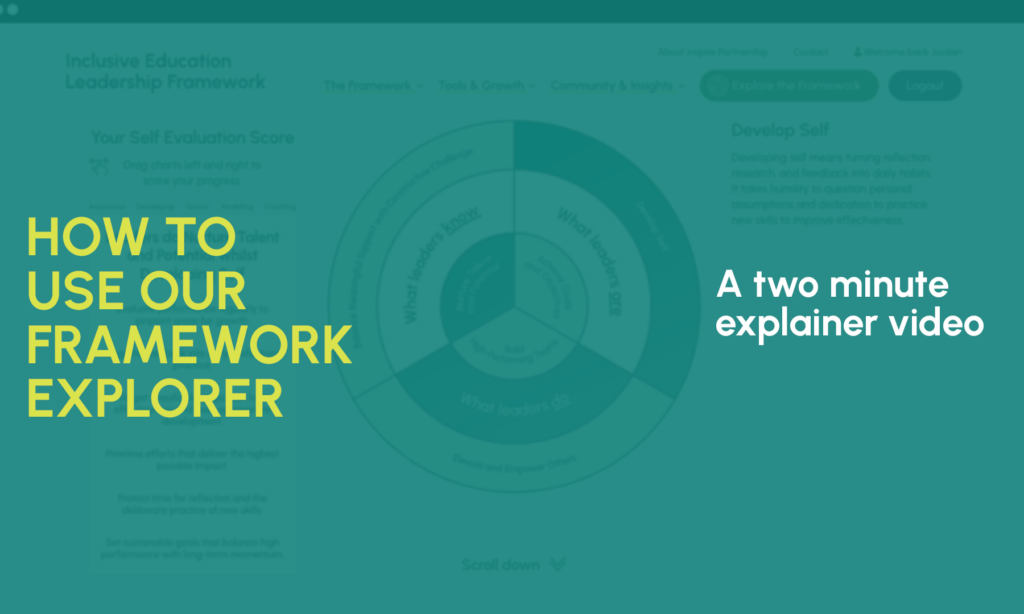

How to Use the IELF Self-Evaluation Tool
Step 1: Personalise Your Profile
Start by ensuring your account details are up to date.
Before diving into your evaluation, select your current job role and the stage on the Continuum of Influence that best reflects your primary focus. This ensures your evaluation profile is perfectly matched to you.
You can choose from:
Stage 1: Self-Leadership
Stage 2: Team Leadership
Stage 3: Operational Leadership
Stage 4: Strategic Leadership
Stage 5: System Leadership
Step 2: Navigate the Interactive Framework
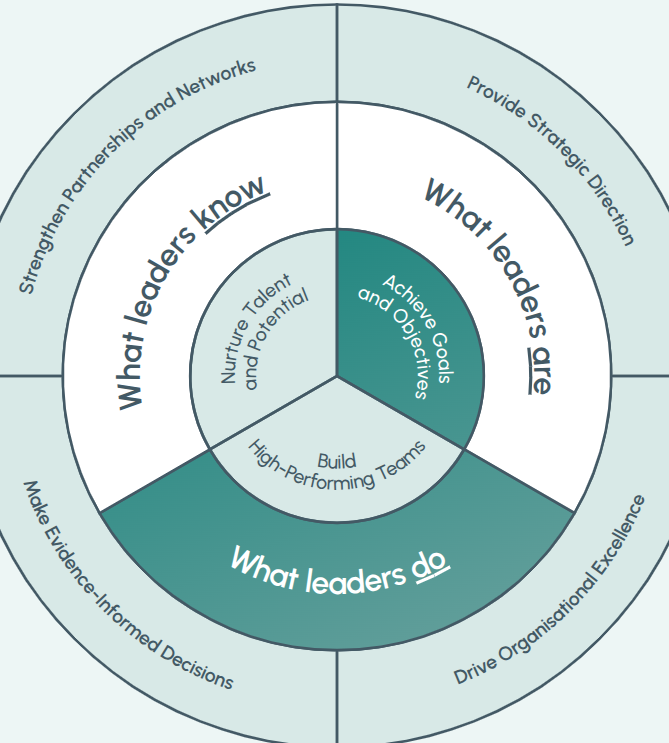
Visit the Interactive Framework to familiarise yourself with the 3 Pillars (What Leaders Are, Know, and Do) and the 9 Strands.
Rather than trying to tackle all 9 strands at once, we recommend choosing 2–3 specific strands that closely align with your current role or immediate growth goals. To begin, simply select a pillar, then click on a strand within the inner circle (e.g., “Achieve Goals and Objectives”).
Step 3: Evaluate Your Practice
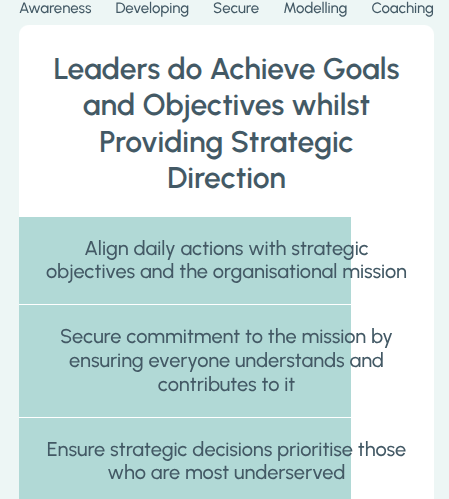
Once inside a strand, select a sub-strand on the outer ring to view the specific statements detailing the behaviours, knowledge, and actions in that area.
For every statement, you will drag the slider along the statement to indicate where your current practice sits using the 5-Point Mastery Scale:
| Mastery Level | What This Means in Practice |
| Awareness | I am building an understanding of this expectation and its impact on others. |
| Developing | I am actively practicing this and building it into my daily routines. |
| Secure | This is a firm, reliable, and consistent habit in my daily professional practice. |
| Modelling | I consistently model this attribute as a visible exemplar for others to observe. |
| Coaching | I actively coach, support, and empower others to develop this capability. |

While every member of the organisation is empowered to access and embody all aspects of the Leadership Framework, the stages highlight the primary areas of focus as an individual’s scope of influence shifts and expands. Because this tool maps a lifelong leadership journey, you will naturally encounter statements—particularly as you move deeper into the KNOW and DO pillars—that sit outside your current daily scope.
- Focus on what fits: The uppermost statements in each strand (especially within What Leaders ARE) are universal and apply to everyone. Anchor your reflection there.
- Use the ‘Awareness’ level: If a statement reflects a strategic or systemic action you do not currently undertake, this is not a failing. You can mark it as ‘Awareness’ (I am building an understanding of this expectation and its impact on others) to signify it as a future area of interest, or simply skip it.
- Remember the purpose: This tool is not a performance grading system or a compliance checklist—it is an instrument for personal empowerment and collaborative growth. You are only evaluating the areas that add value to your current practice.

Step 4: Review Your Personalised Dashboard
Head over to your dashboard to view your personalised leadership profile.
This page will automatically update with your self-evaluation progress, providing you with your leadership signature, your key strengths to leverage, development opportunities and reflective coaching questions.
Your progress is securely saved so you can return to it at any time. You also have the option to print a snapshot of your profile, allowing you to easily track your journey and compare your growth against future evaluations.

This tool is not a performance grading system or a compliance checklist—it is an instrument for personal empowerment and collaborative growth.
For Daily Practice: Translate your personalised insights into small, intentional habits you can apply in your day-to-day role.
For Professional Growth Conversations: Share your report with a coach, mentor, or line manager to anchor your meetings in shared language and guide constructive, forward-facing discussions.
For Succession Planning: Use your identified strengths to explore new developmental opportunities and confidently step into wider spheres of influence.